
HRTI vs. the Big Guys: Better Materials, Better Installation, For Less
 The Big-Franchise Sales Pitch vs. How HRTI Actually Works
National window franchises, such as national resellers of Andersen windows or Champion, are built around a sales process as much as a product: an in-home presentation, often two hours or more, a “today-only” discount, and pricing that has to cover national advertising and franchise fees on top of the windows themselves. None of that is illegal or even unusual, it’s just a different business model than a locally owned contractor.
HRTI has been a full-service exterior remodeling contractor in the Denver metro area and foothills since 1972. We give you a free, no-pressure estimate, walk you through real options across multiple manufacturers, and let you make the call on your own timeline. There’s no corporate script and no franchise fee baked into the price.
See It for Yourself Before You Sign Anything
Here’s a good gut check before you commit to anything: invite a national franchise sales rep into your home and see what actually happens. One member of the HRTI team did exactly that, out of curiosity. Three hours in, he was ready for the pitch to be over. The rep wasn’t. What started as a product walkthrough turned into a marathon close that didn’t end when he asked it to, the kind of pressure more familiar from a used car lot than a conversation about your own house.
That’s not a one-off story. It’s how the in-home sales model at many national franchises is built to work: a long, scripted visit designed to get a signature before you’ve had time to think it over or call around for a second quote. HRTI’s estimate takes a fraction of that time, and there’s no pressure to sign anything on the spot.
HRTI vs. National Resellers of Andersen Windows: Windows, Pricing & Warranty
National resellers of Andersen windows are among the most recognized national window replacement franchises, some known for their own proprietary Fibrex composite window material, a structured in-home sales presentation, and pricing that reflects a national advertising and franchise-fee model.
Here’s how that compares to working with HRTI:
| National Andersen Resellers | HRTI | |
| Sales process | Structured in-home sales presentation, commonly two or more hours, often built around a same-day close | Free estimate on your schedule, no pressure to decide same-day |
| Window options | Proprietary Fibrex composite product line only | Multiple manufacturers, Pella, Sierra Pacific, Simonton, Sunrise, Weathershield, matched to your home and budget |
| Pricing structure | Includes national advertising and franchise-fee overhead; often three times or more what HRTI charges for a comparable window | Local overhead only; no franchise fee built into your quote |
| Warranty | Manufacturer warranty on Fibrex product line | Manufacturer-backed warranties across every brand we install, plus HRTI’s own workmanship warranty on the installation itself |
| Who shows up for service | Franchise network, may not be the original installer | The same local company that installed the windows, since 1972 |
Bring us your quote: If you already have a quote from a national reseller of Andersen windows, Champion, or another national franchise, HRTI will walk through a comparable window and its warranty terms side by side with your quote, so you can see exactly what you’re paying for beyond the window itself.
Worth knowing too: Fibrex is proprietary to one specific national franchise reseller, but Andersen’s broader window lines aren’t exclusive to any of them. HRTI can source and install genuine Andersen windows directly, and in many cases these national resellers’ pricing runs three times or more what HRTI charges for a comparable window, backed by our own installation crews rather than a franchise-network installer.
On warranty: It’s not just about matching the manufacturer’s product warranty. HRTI backs every installation with our own workmanship warranty on top of it, warranty coverage that stays with the same local company since 1972, not a franchise network where the crew that installed your windows may not be who shows up if something needs attention down the road.
Why Installation Quality Matters More Than the Name on the Box
We’ve been doing this since 1972, and one thing hasn’t changed: the finish material is only as good as what it’s installed over and how carefully it’s installed. We’ve walked plenty of other contractors’ completed jobs over the years, and the same handful of shortcuts show up again and again: missing or wrong sheathing behind heavy siding, unprimed or improperly sealed siding edges left exposed to the weather, gaps at trim and flashing that let water in behind the finish, and cheaper hardboard-composite siding products installed without the priming and maintenance schedule they actually require to hold up.
That last one matters more than people realize. Hardboard and composite wood siding products have a well-documented history of moisture-related failures (swelling, delamination, rot) when they aren’t properly primed, sealed, and maintained, which is a big part of why the industry has largely moved toward factory-finished engineered wood products with real weather protection built in. LP SmartSide’s DiamondKote factory finish, for example, is engineered specifically to resist that kind of moisture intrusion in a way an unprimed or field-primed board simply isn’t.
We’ve written about this before: see our piece on why proper sheathing matters before installing heavier siding, which came out of a real job site where a competitor skipped the plywood or OSB backer Hardie siding requires.
One shortcut worth calling out specifically: installing James Hardie fiber cement siding direct to the studs, skipping the OSB or plywood sheathing Hardie’s own installation instructions call for behind it. Sheathing isn’t optional on a heavy fiber cement product, it’s what gives the fasteners something solid to bite into and what keeps the wall assembly rigid enough for the siding to perform the way it’s rated to. A direct-to-stud Hardie installation can look fine on day one, but it’s set up to sag, gap at the seams, and fail at the fasteners well before a properly sheathed installation would. HRTI installs Hardie over the sheathing the manufacturer requires, every time, not just when it’s convenient.
How to Spot a Shortcut Installation on Any Home (Not Just Ours)
Whether you’re evaluating a completed job, a neighbor’s project, or your own home, these are worth checking:
- Exposed, unprimed cut edges: any cut or drilled edge on engineered wood or hardboard siding should be factory-primed or field-sealed before installation, not left bare.
- No visible housewrap or moisture barrier: if you can see house wrap or building paper gaps at seams during construction, that’s worth asking about.
- Missing or minimal flashing at windows, doors, and roof-to-wall transitions: flashing is what actually keeps water out at these vulnerable points, not just the caulk on top.
- Heavy siding installed directly over old siding or thin sheathing: fiber cement and similar heavy products need the substrate spec’d by the manufacturer, cutting this corner shows up later as sagging or gapping.
- Caulk used to hide gaps instead of proper trim and flashing work: caulk is a finishing touch, not a structural fix.
A piece of siding in a box can say “guaranteed” on the label. What actually determines whether that guarantee means anything is what’s behind it and how it was installed, not the marketing on the packaging.
 The HRTI Difference
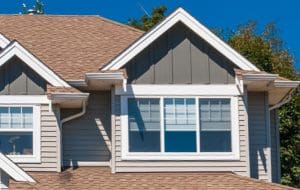 The HRTI Difference
HRTI has been a full-service exterior remodeling contractor in the Denver metro area and foothills since 1972. Whatever brought you here (a siding repair, a re-roof, new windows, or an exterior paint job), our crews inspect what’s behind the surface (sheathing, flashing, moisture barriers, framing) before we ever touch the finish material, because the finish is only as good as what it’s fastened to.
We install and service:
- Windows & Doors: energy-efficient replacement windows and entry/patio doors from Pella, Sierra Pacific, Simonton, Sunrise, Weathershield, and more
- Siding: James Hardie fiber cement, LP SmartSide DiamondKote with RigidStack, vinyl, metal, and specialty wood siding, installed over the correct sheathing every time
- Exterior Painting: full prep, repair of rotted or damaged substrate, and premium Sherwin-Williams coatings
- Roofing: asphalt, synthetic, stone-coated steel, and Class A fire-rated options like CeDUR synthetic shake
For a closer look at how HRTI compares specifically on siding materials, see our guide on the best siding for Colorado’s climate, or our guide on fiberglass vs. vinyl windows if windows are the project on your mind.
Frequently Asked Questions
Are national resellers of Andersen windows worth the higher price?
It depends what you’re paying for. Some of these resellers’ proprietary composite window materials are solid, well-engineered products, but a meaningful part of the price covers a national sales and advertising model, not just the window itself. HRTI installs several comparable window lines and can show you how the numbers compare once that overhead is out of the equation.
Is Fibrex the only way to get a genuine Andersen window?
No. Fibrex is proprietary to one specific national franchise reseller, but Andersen’s broader window lines aren’t exclusive to any of them. HRTI can source and install genuine Andersen windows directly, and in many cases these national resellers’ pricing runs three times or more what HRTI charges for a comparable window, with our own crews doing the installation.
Do national Andersen resellers’ warranties match what HRTI offers?
Not necessarily. Their manufacturer warranty covers the product itself, but HRTI backs every installation with our own workmanship warranty on top of the manufacturer’s coverage, from the same local company that’s been doing this since 1972, not a franchise network.
Can HRTI install the same brand of windows as a big franchise company?
HRTI installs Pella, Sierra Pacific, Simonton, Sunrise, and Weathershield, among others, which cover a similar range of performance tiers, from budget-friendly vinyl to premium fiberglass and composite options, as most national franchise lines.
How can I tell if a previous contractor installed my siding correctly?
Look for unprimed or unsealed cut edges, visible gaps at trim and flashing, and any sagging or separation at seams. If you’re not sure, HRTI offers free exterior inspections and can tell you honestly whether what’s there needs attention.
Does HRTI price-match national franchise quotes?
HRTI doesn’t guarantee a specific price match, but we’re happy to review a competing quote with you and show you exactly how our materials, installation process, and warranty terms compare, so you can make an informed decision either way.
Why does unprimed hardboard or composite siding fail faster?
Hardboard and composite wood siding products need a factory or properly applied field primer and ongoing maintenance to resist moisture. Left unprimed or improperly sealed, they can absorb water at cut edges and seams, leading to swelling, delamination, or rot well before a properly finished product would show wear.
Does Hardie siding really need plywood or OSB sheathing behind it?
Yes. James Hardie’s own installation instructions call for proper sheathing behind fiber cement siding, not a direct-to-stud installation. Skipping it leaves fasteners without solid backing and the wall assembly without the rigidity the siding needs to perform correctly, which shows up over time as sagging, gapping, or fastener failure. HRTI installs Hardie over the sheathing the manufacturer requires on every job.