
Class A Fire-Rated Wood Siding: What It Is and Which Products Qualify
| Quick answer: Class A fire-rated wood siding is real wood siding that has been pressure-treated with an exterior-grade fire retardant and tested to achieve a flame-spread index of 0 to 25 under ASTM E84, the same standard used to rate Class A roofing. It’s not a stain or surface coating: the fire-retardant chemicals are driven into the wood’s cell structure so the wood chars instead of sustaining flame. Manufacturers and suppliers offering this treatment include Montana Timber Products (its Fireline process), the Cedar Shake & Shingle Bureau (its Certi-Guard certification), and premium wood siding options such as Hewn and Vintage, based in Gypsum, Colorado. |
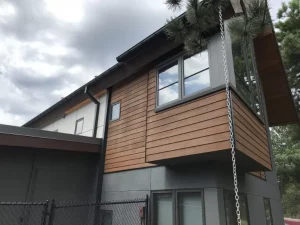 What Does “Class A Fire-Rated” Mean for Wood Siding?
Class A is the highest of three fire-performance ratings (Class A, B, and C) assigned under ASTM E84, the standard test method for surface burning characteristics of building materials. A Class A rating means a flame-spread index between 0 and 25, the slowest flame-spread category in the standard. Untreated wood siding does not meet this standard on its own; achieving it requires treating the wood itself, not just applying a fire-resistant coating to the surface.
How Real Wood Achieves a Class A Rating
Getting real wood siding to a Class A rating takes a pressure-impregnated treatment, not a surface-level stain or paint. The process forces fire-retardant chemicals into the wood’s cell structure so that, when exposed to flame, the wood chars rather than sustaining combustion. For an exterior product, the treatment formulation also has to hold up to rain and snow without leaching out over time; a treatment that needs to be reapplied every few years isn’t a realistic long-term solution for a home’s siding.
Class A Fire-Rated Wood Siding Products
Montana Timber Products: Fireline
Montana Timber Products, a supplier HRTI has worked with before, treats its ranchwood, AquaFir, and Charwood siding lines with a proprietary process called Fireline. The company markets Fireline-treated products as Class A fire rated and WUI compliant, using an all-natural, non-toxic formulation the company says lasts the lifetime of the wood with no retreatment needed.
Cedar Shake & Shingle Bureau: Certi-Guard
The Cedar Shake & Shingle Bureau offers a similar path through its Certi-Guard certification, which designates independently fire-retardant-treated cedar shakes and shingles for jurisdictions that require that level of protection.
Hewn
Hewn is a high-end, premium wood siding option HRTI can help homeowners source when the priority is a distinctive, natural wood look alongside Class A fire performance. As with any fire-retardant-treated wood product, confirm current product lines, treatment process, and warranty terms directly with the manufacturer before specifying it for a project.
Vintage (Gypsum, Colorado)
Vintage, based in Gypsum, Colorado, is another premium, high-end wood siding option worth considering, particularly for homeowners who value sourcing from a Colorado-based supplier. As with any fire-retardant-treated wood product, confirm current product lines, treatment process, and warranty terms directly with the manufacturer before specifying it for a project.
| Product / Certification | Wood Products Covered | Treatment Approach | Rating | Notes |
| Montana Timber Products: Fireline | Ranchwood, AquaFir, Charwood siding lines | Proprietary pressure treatment, all-natural, non-toxic formulation | Class A, WUI compliant per manufacturer | Company states no retreatment needed for the life of the wood; HRTI has worked with this supplier before |
| Cedar Shake & Shingle Bureau: Certi-Guard | Cedar shakes and shingles | Independent fire-retardant treatment certification | Class A (independently certified) | Certification path specifically built for jurisdictions requiring fire-retardant-treated cedar |
| Hewn | Premium wood siding lines (confirm current offerings with manufacturer) | Fire-retardant treatment (confirm process with manufacturer) | Class A (confirm current certification with manufacturer) | High-end option; confirm specifications and warranty directly with Hewn |
| Vintage | Premium wood siding lines (confirm current offerings with manufacturer) | Fire-retardant treatment (confirm process with manufacturer) | Class A (confirm current certification with manufacturer) | High-end option based in Gypsum, Colorado; confirm specifications and warranty directly with Vintage |
Where Class A Fire-Rated Wood Siding Is Required or Recommended
Jurisdictions with Wildland-Urban Interface (WUI) building codes generally require noncombustible or ignition-resistant siding for covered projects, which untreated wood does not satisfy. Jefferson County’s Wildfire Resiliency Code and Clear Creek County’s comparable requirements are two examples on Colorado’s Front Range. See our guide on Jefferson and Clear Creek County’s wildfire resiliency codes for the specific requirements in that area. Because code acceptance varies by manufacturer and jurisdiction, always confirm with the relevant building department that a specific Class A fire-retardant-treated wood product satisfies local requirements before ordering materials.
Class A Wood Siding vs. Fiber Cement and Engineered Wood
Fiber cement (like James Hardie) is noncombustible by its underlying composition, not by an added treatment, and is a common alternative for homeowners who want fire-resistant siding without necessarily needing the look of real wood. Engineered wood siding, such as LP SmartSide DiamondKote with RigidStack, is a durable, weather-resistant option, but it does not carry a Class A fire rating on its own; it should not be treated as equivalent to fiber cement or a pressure-treated, Class A fire-rated wood product for a project where that specific rating is required. Class A fire-rated wood siding, whether achieved through pressure treatment of real wood or through fiber cement’s inherent noncombustibility, exists for homeowners in WUI-designated areas who need that specific level of fire resistance. See our full comparison guide on the best siding for Colorado’s climate for how these materials stack up more broadly.
How HRTI Installs Class A Fire-Rated Wood Siding
HRTI can help specify a compliant, treated real-wood product alongside fiber cement, engineered wood, or metal siding options, and installs over the correct sheathing every time so the finished job performs the way it’s rated to. See our full Siding service page for the complete range of materials we install.
Frequently Asked Questions
What flame-spread rating does Class A wood siding need to meet?
A flame-spread index of 0 to 25 under ASTM E84, the standard test method for surface burning characteristics of building materials. That’s the same rating threshold used for Class A roofing.
Is untreated cedar or wood siding ever Class A fire rated?
No. Untreated wood siding does not meet a Class A flame-spread rating on its own. Achieving that rating requires a pressure-impregnated fire-retardant treatment, such as Montana Timber Products’ Fireline process, the Cedar Shake & Shingle Bureau’s Certi-Guard certification, or the treatments used by premium suppliers like Hewn and Vintage.
Does Class A fire-rated wood siding need to be retreated over time?
It depends on the manufacturer and formulation. Montana Timber Products states its Fireline treatment is formulated to last the lifetime of the wood without retreatment, but always confirm the specific warranty and maintenance requirements for whichever product you choose.
Is Class A fire-rated wood siding accepted under Jefferson County and Clear Creek County’s wildfire codes?
Pressure-treated, Class A fire-rated real wood products are generally built to meet the ignition-resistant siding standard these codes require, but code acceptance varies by manufacturer and jurisdiction. Confirm with the relevant county building department that your specific product satisfies local requirements before ordering materials.
How does Class A fire-rated wood siding compare in cost to fiber cement?
Pricing varies by manufacturer, wood species, and project size, so it’s best evaluated with a specific quote. HRTI can help you compare treated real wood against fiber cement and engineered wood options for your particular project and budget.
HRTI: Windows, Doors, Siding, Painting & Roofing, Done Right, From the Studs Out
HRTI has been a full-service exterior remodeling contractor in the Denver metro area and foothills since 1972. Whatever brought you to this page (a siding repair, a re-roof, new windows, or an exterior paint job), our crews inspect what’s behind the surface (sheathing, flashing, moisture barriers, framing) before we ever touch the finish material, because the finish is only as good as what it’s fastened to.
We install and service:
- Windows & Doors: energy-efficient replacement windows and entry/patio doors from Pella, Sierra Pacific, Simonton, Sunrise, Weathershield, and more
- Siding: James Hardie fiber cement, LP SmartSide DiamondKote with RigidStack, vinyl, metal, and specialty wood siding, installed over the correct sheathing every time
- Exterior Painting: full prep, repair of rotted or damaged substrate, and premium Sherwin-Williams coatings
- Roofing: asphalt shingles, synthetic shingles (including DaVinci slate and shake), stone-coated steel, and Class A fire-rated options like CeDUR synthetic shake
Not sure where to start? Call HRTI at 303-984-6159 or email info@hrti.com for a free consultation. You can also reach us anytime through our contact page.
Sources & Further Reading
- Montana Timber Products: Fireline Class A Fire-Rated Wood Siding
- Cedar Shake & Shingle Bureau: Certi-Guard Fire-Retardant Treatment
- HRTI: Jefferson and Clear Creek County’s Wildfire Resiliency Codes
- HRTI: What’s the Best Siding Material for Colorado’s Climate?
- HRTI Siding Services